Simulated radar & air-defence positions
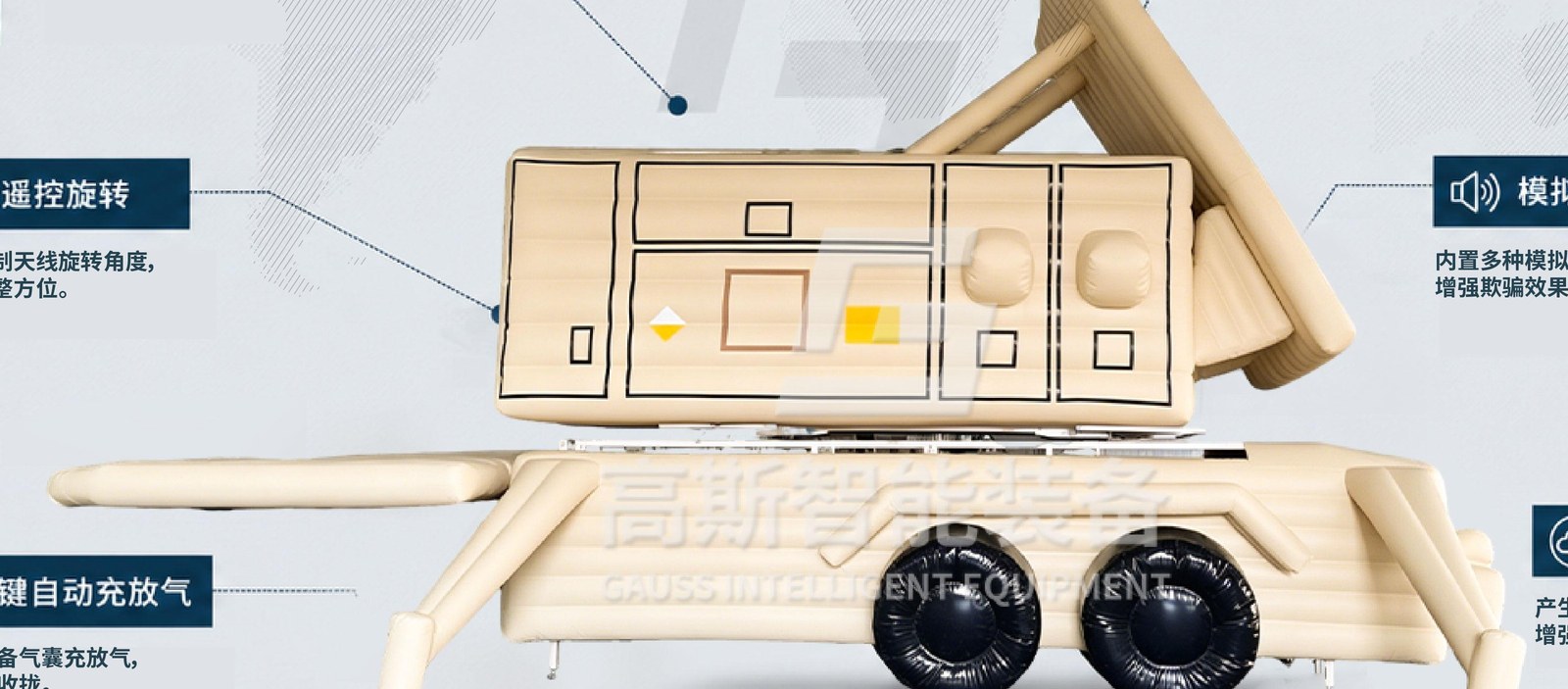
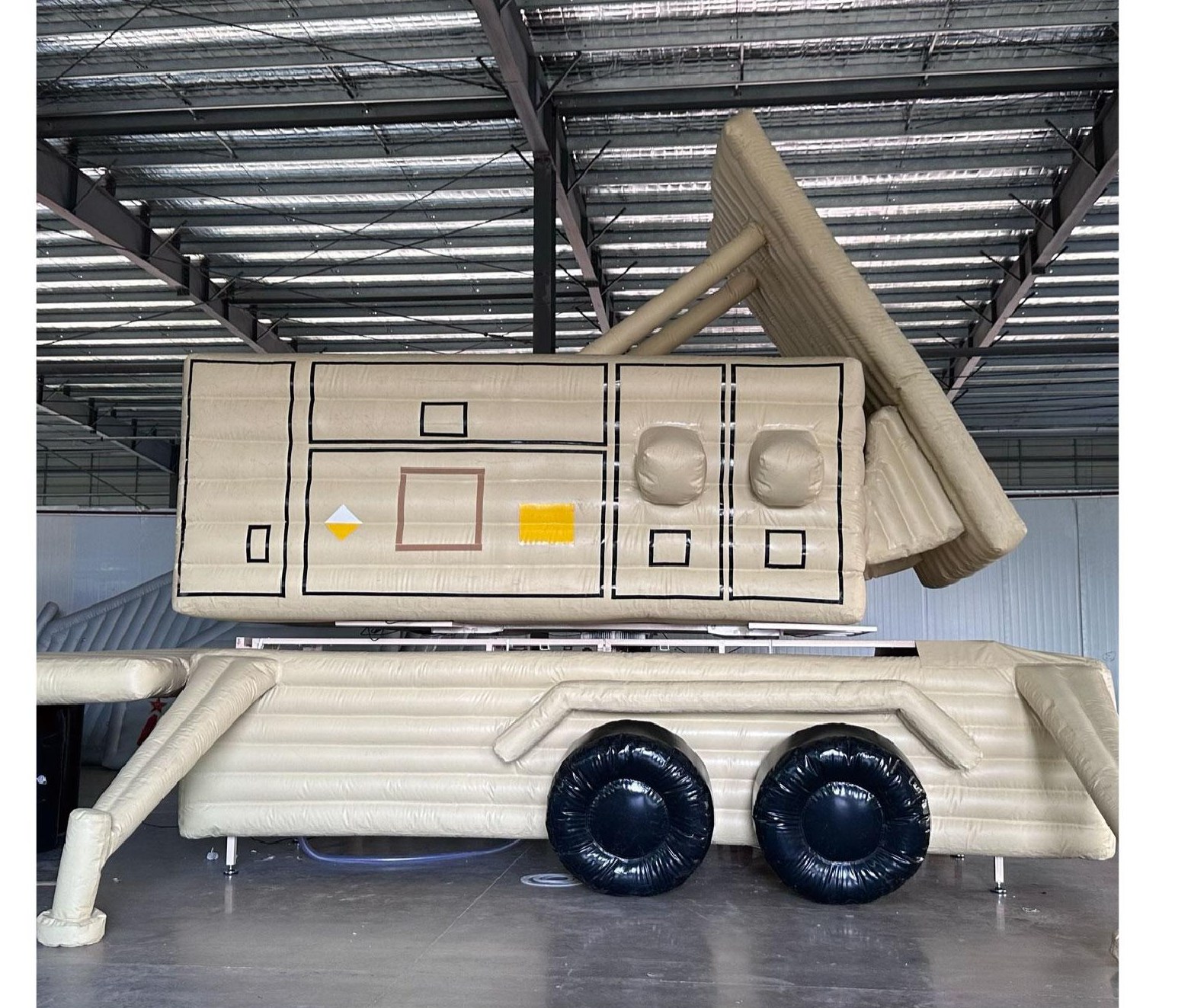
Radar vehicle decoy — metallic fabric body
A radar decoy whose entire body is clad in metallic fabric, giving a strong and uniform radar return across the whole vehicle rather than at the antenna alone.
- Material
- Full-body metallic fabric surface
- Radar reflectivity
- ≥95%
- Operating frequency
- 1–20 GHz
- Deployment time
- 10–15 min
01
Gallery
Product gallery
02
Simulated radar & air-defence positions
Product details
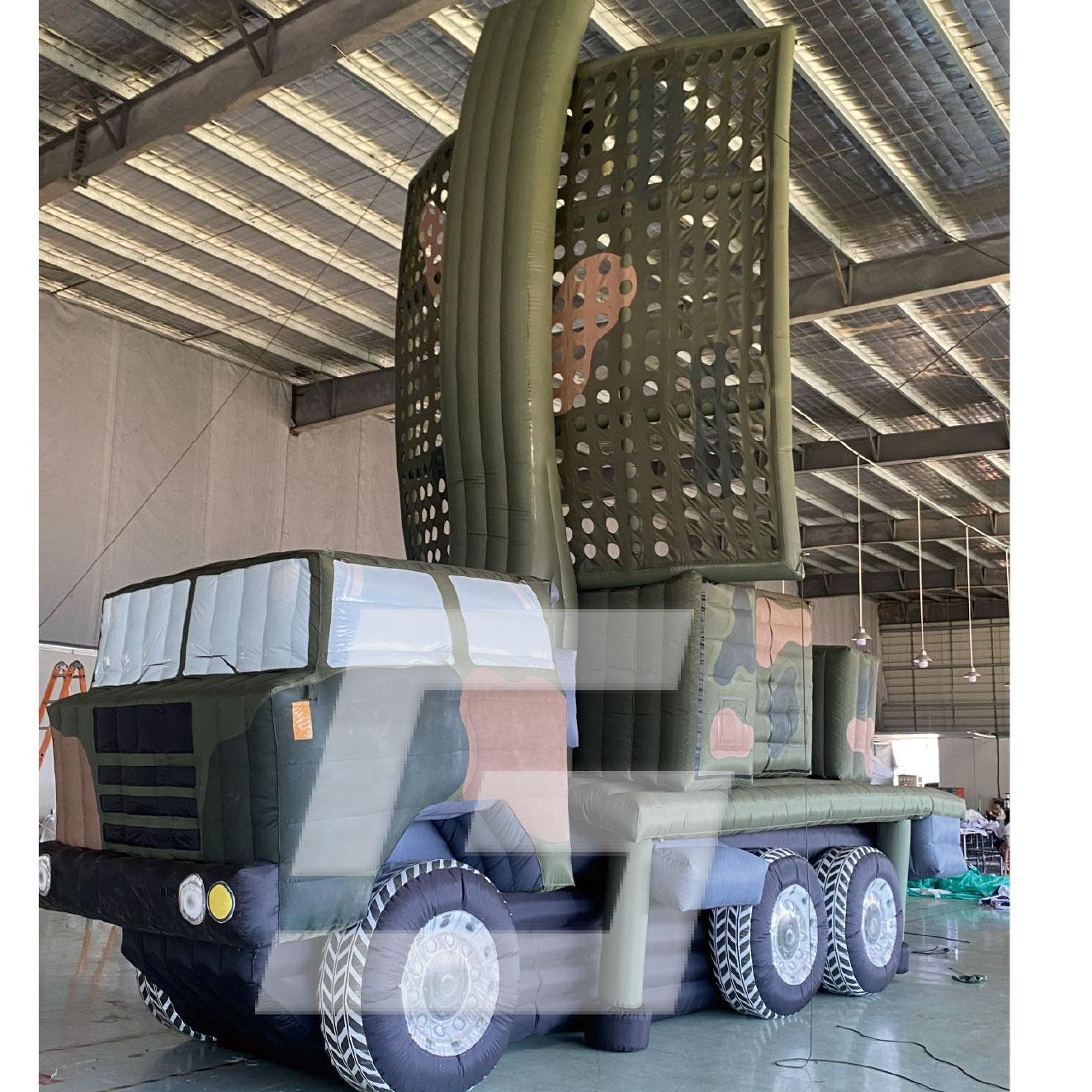
This version is finished in full metal-fabric camouflage rather than printed pattern, giving a harder and more reflective surface that behaves differently under optical and infrared sensors. It is normally specified when a decoy field has to contain visibly different targets, or where local camouflage practice uses metal-fabric covering.
Radar decoys combine a structural fabric envelope with a nano metallic coating tuned to the frequency bands of the emitters they must defeat. Trailer and shelter bodies reproduce the panel lines, louvres and antenna positions of the original, and rotating arrays are driven by low-power electric actuators so the decoy keeps producing movement after deployment.
Key features
- Full-body metallic fabric cladding
- Uniform radar return across the vehicle
- Deep antenna array detail
Typical applications
High-fidelity radar decoy · evaluation trials · exhibition
03
Technical specifications
Technical specifications
| Material | Full-body metallic fabric surface |
|---|---|
| Radar reflectivity | ≥95% |
| Operating frequency | 1–20 GHz |
| Deployment time | 10–15 min |
| Operating crew | 3 |
| Options | Camouflage pattern to customer specification |
04
Simulated radar & air-defence positions
What is included
- Radar vehicle hull and antenna assembly
- Corner reflector set for the required radar cross-section
- Electric inflation blower
- Remote control unit and receiver
- Guy lines with ground anchors
- Repair patch kit and adhesive
- Operation and maintenance manual
05
Simulated radar & air-defence positions
Deployment
-
Choose the site and the return you need
Pick ground with the same horizon and clutter as a real radar site, and confirm the radar cross-section to be reproduced.
-
Fit the reflector set
Assemble the corner reflectors to the agreed cross-section before the hull is inflated.
-
Inflate
Run the blower to working pressure — about 3 minutes.
-
Raise and align the antenna
Erect the antenna and set the search azimuth to match the position being simulated.
-
Connect the remote control
Pair the control unit and confirm rotation speed and reflection intensity from the operator position.
-
Check against the sensor
Observe the position from the likely sensor direction and adjust orientation or reflectors if the return needs trimming.
-
Recover
Deflate, fold, and store the reflectors separately so the set stays matched.
06
Simulated radar & air-defence positions
Frequently asked questions
Questions buyers ask about the Radar vehicle decoy — metallic fabric body.
Can the radar cross-section be matched to a real radar set?
Yes. Corner reflectors and metal fabric in the skin give an adjustable radar cross-section from 0.1 to 50 m², so the decoy can be tuned to the radar type it is standing in for rather than presenting a generic return.
How accurate is the infrared simulation?
The thermal signature is reproduced to within ±20 °C of the target profile, which is close enough for imaging infrared sensors and for thermal target identification at operational ranges.
Can the antenna rotate?
Yes. The remote-control option rotates the antenna a full 360°, with adjustable rotation speed and reflection intensity, driven from up to 2 km away. A stationary antenna is also available where the scenario does not call for movement.
How quickly can a radar position be established?
About 3 minutes for inflation by a two-person team, which makes it practical to move a decoy position between observation windows.
Does it stay inflated for long exercises?
The continuous-inflation version holds pressure indefinitely from a low-power supply, so the position reads as continuously occupied for weeks rather than sagging between top-ups.
Which sensors does it defeat?
Optical observation, imaging infrared and radar. The skin is a radar-reflective metal fabric, the thermal layer is adjustable, and the outer finish is a PU-coated camouflage that holds its colour in ultraviolet light.
Can several decoys be supplied as one air-defence layout?
Yes. Radar, launcher and support vehicles can be supplied as a matched set with a common signature specification, so an entire battery reads as a single coherent position.
07
Simulated radar & air-defence positions
Ordering and delivery
- Minimum order
- From 1 set — mixed models can share one container
- Sample lead time
- 72 hours for stock patterns
- Documentation
- Bid documents, test reports and certificate of origin
- Customisation
- Camouflage, unit markings, insignia and signature options
- Service life
- Over 200 inflation cycles in field conditions
- Lead time & payment
- Lead time and payment terms confirmed on enquiry
Tell us the platforms you need to simulate and we will confirm specification, lead time and payment terms in writing.
Enquire about this productRelated products
Send us your platform list
Tell us which vehicles, aircraft or radar sets you need to protect and we will return a configuration, a lead time and an export quotation.